Understanding Visuomotor Coordination in Driving Behavior
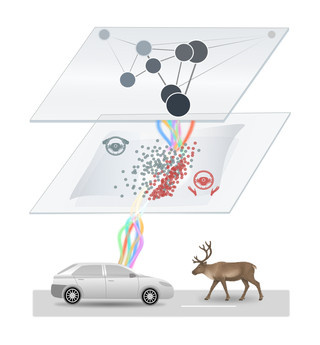
Recent research explores how drivers coordinate their movements and perceptions during complex driving tasks. By simulating hazardous driving scenarios in a virtual environment, scientists analyzed the eye, head, and vehicle movements of participants in both manual and automated driving conditions. This study reveals that driving behavior can be described by a small number of coordinated dimensions, which adapt to task demands, offering insights into the underlying mechanisms of human behavior in dynamic environments.
The study of human behavior often reveals the intricate ways in which we interact with our environment, particularly in complex tasks like driving. A recent investigation into visuomotor coordination has shed light on how drivers manage to navigate challenging situations on the road. This research utilized an immersive virtual driving simulation that presented participants with ten hazardous scenarios, such as encountering pedestrians or animals. By analyzing the eye movements, head turns, and vehicle control of 284 drivers, the researchers aimed to understand the underlying patterns that govern these complex behaviors.
Driving is a multifaceted skill that requires the integration of sensory input and motor responses to achieve safe and effective navigation. The study hypothesized that despite the apparent complexity of driving, there exist low-dimensional representations of behavior that can simplify our understanding of how drivers respond to various challenges. Participants were divided into two groups: those who manually controlled the vehicle and those who experienced automated driving. This setup allowed researchers to compare how different driving conditions influenced behavior.
More Humans Shop
Amazon shopping links. Paid link
The results indicated that a small number of coordinated behavioral patterns were sufficient to describe the drivers' actions. Notably, the effective dimensionality of their movements decreased during critical events, suggesting that drivers became more synchronized in their responses when faced with potential hazards. This finding implies that the brain efficiently organizes complex tasks by relying on a limited set of strategies, which can be adapted based on the context of the driving situation.
Examining the Variability in Driver Coordination Under Different Conditions
As the study progressed, it became evident that the coordination of eye, head, and vehicle movements was not only task-dependent but also varied between manual and automated driving conditions. The research highlighted that during moments of heightened danger, drivers exhibited a tighter integration of their perceptual and motor systems, leading to more distinct driving behaviors. This adaptability underscores the brain's remarkable ability to reorganize and prioritize sensory information in real-time, enhancing safety and performance on the road.
Insights into Human Behavior and Future Vehicle Design
The implications of this research extend beyond driving; they provide valuable insights into the broader understanding of human behavior in dynamic environments. By revealing the shared low-dimensional coordination strategies employed by drivers, the study contributes to a growing body of knowledge that seeks to link neural processes with observable behaviors. Such findings could inform the design of adaptive automated vehicles, ensuring they can respond effectively to human-like driving patterns.
In summary, the research into visuomotor coordination during driving not only enhances our understanding of how humans navigate complex tasks but also opens avenues for improving safety and efficiency in automated systems. By focusing on the fundamental dimensions of behavior, we can better appreciate the intricacies of human action in the face of unpredictable challenges on the road.