Vectorial AI Secures $3M to Enhance Consumer Research with Simulation
Vectorial AI Inc. has raised $3 million in seed funding to launch its innovative platform that simulates human behavior for consumer research. This technology aims to revolutionize how companies gather feedback for product development, moving away from traditional survey methods that often yield limited insights.
Vectorial AI Inc. has announced it has secured $3 million in seed funding to launch a groundbreaking platform designed to simulate human behavior, significantly enhancing consumer research processes. The funding round was co-led by Smilegate and SenseAI Ventures, with additional contributions from the University of California at Berkeley and Stanford University ecosystem funds, as well as angel investors from major corporations like Meta Platforms Inc., Mastercard Inc., and Shopify Inc.
The startup aims to address a critical bottleneck in technology development, particularly in the realm of consumer research, which has traditionally been slow and cumbersome. Many companies still rely on outdated survey methods that can take weeks to compile and are often limited to small sample sizes, typically involving only 50 to 100 participants. According to co-founder and Chief Executive Taranveer Singh, this outdated approach often leads smaller startups to forego user research altogether, relying on assumptions about consumer preferences that can result in wasted resources on products that miss the mark.
More Humans Shop
Amazon shopping links. Paid link
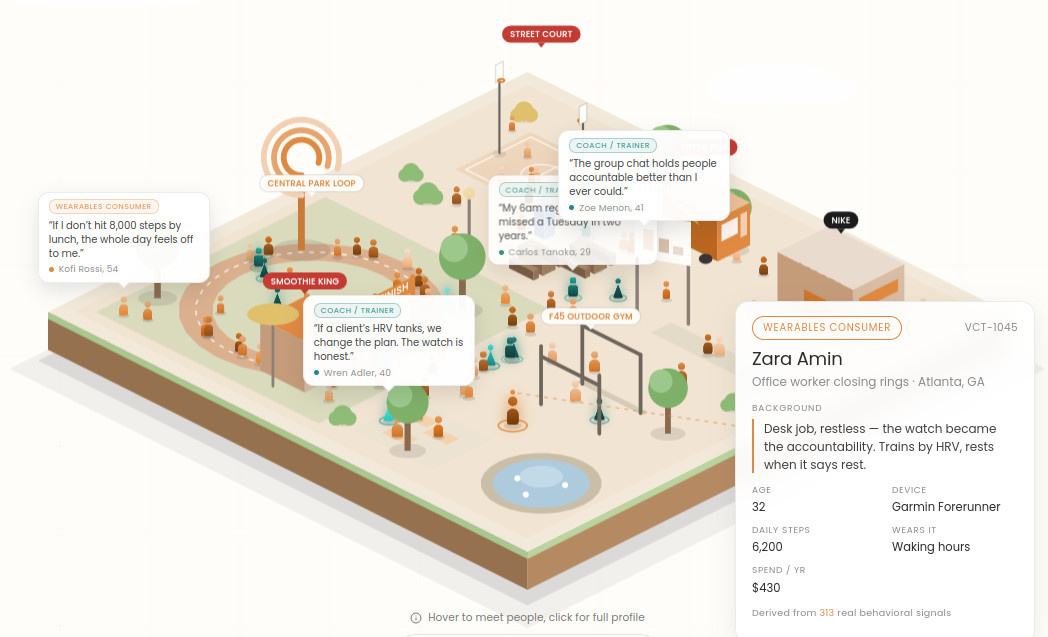
"AI is creating two distinct frontiers," Singh remarked. "One focuses on reasoning and solving complex problems, while the other focuses on simulations and decoding human behavior." Rather than gathering real human participants for testing, Vectorial's platform utilizes AI to create simulations of thousands of users within specified demographics. This innovative approach is based on a concept referred to as a "living model" of target customers, which continuously updates to reflect emerging trends and behavioral shifts.
The feedback generated from these simulated audiences is reported to be highly accurate, with Singh expressing confidence that this method will become the standard for consumer product development within the next four years. He highlighted two essential components that are currently lacking in traditional methods: the ability to simulate numerous scenarios and to integrate user feedback throughout the product development process.
Vectorial's Innovative Approach to Consumer Research Redefines AI Integration
Vectorial's approach improves upon previous attempts by other startups that have sought to leverage AI for consumer research. Many of these efforts have relied on AI-moderated interviews or synthetic agents, which still depend on real human input and often yield unreliable results. In contrast, Vectorial embeds its simulated audiences directly into the development workflows of companies, providing a continuous stream of valuable feedback that informs design decisions.
The platform is powered by a behavior model named SAPIENS, which is trained on a vast database of over 2.5 million real consumers, incorporating socio-demographic, psychographic, and behavioral traits. This model reportedly offers a 30% increase in accuracy compared to general-purpose models in predicting consumer behavior. The funding will be used to expand the behavioral dataset and develop an enhanced version of the model, SAPIENS 2.0.
Promising Early Results Highlight Vectorial's Impact on Market Understanding
The early results from Vectorial's platform have been promising, with clients in e-commerce, gaming, and healthcare sectors, such as GoodRx Inc., Boat, Everkind Inc., and Concrete Software Inc., conducting an average of 600 simulations each month. These clients receive ongoing feedback on design changes and feature implementations, with accuracy rates of around 86% when comparing simulated audience feedback to real user studies.
This accuracy is a significant factor in attracting investors like Rahul Agarwalla of SenseAI Ventures, who noted that many companies struggle to grasp their users' needs, thus failing to capitalize on the rapid development capabilities that AI provides. "Vectorial replaces the slow theater of surveys with millions of simulated humans using the product and providing insights," Agarwalla stated. "This is a new class of AI designed to predict human behavior, not just the next word like LLMs do."